Boston Celtics vs Orlando Magic Timeline: Complete History, Rivalry Evolution, Stats & Key Moments

The rivalry between the Boston Celtics and the Orlando Magic is one of the more underappreciated matchups in the NBA. While it does not carry the historic intensity of legacy rivalries, it has consistently delivered competitive games, important playoff clashes, and the emergence of elite talent.
From Orlando’s expansion into the league to Boston’s modern championship pursuits, this timeline provides a comprehensive breakdown of their encounters, key milestones, and evolving competitive balance.
1989–1995: Expansion Era and Early Dominance
The Orlando Magic joined the NBA in 1989 as an expansion franchise, while the Boston Celtics were already an established powerhouse with decades of success.
During the early years:
- Boston dominated most matchups due to experience and roster depth
- Orlando focused on building its identity and roster
- Games were often one-sided in favor of Boston
The dynamic shifted when Orlando drafted Shaquille O’Neal in 1992. His presence immediately elevated the Magic’s competitiveness and physical presence on the court.
This period laid the groundwork for the rivalry, even though it was still in its early stages.
1996–2003: Transition and Competitive Balance
Following Orlando’s early rise, both teams experienced transitions.
Orlando Magic:
- Lost key players and entered a rebuilding phase
- Struggled to maintain consistent performance
Boston Celtics:
- Rebuilt around Paul Pierce
- Began to stabilize and improve
As a result, games between the two teams became more competitive. Neither team maintained consistent dominance, and the rivalry began to take shape in a more balanced way.
2004–2008: Foundation for Future Success
This era marked a critical rebuilding phase for both franchises.
Boston Celtics:
- Made strategic roster moves
- Positioned themselves for a championship run
Orlando Magic:
- Drafted Dwight Howard in 2004
- Built a defensive identity around him
Matchups during this period became more tactical, with both teams improving their systems. This phase set the stage for the most important chapter in their rivalry.
2009–2010: Defining Playoff Rivalry
The rivalry reached its peak during the 2010 NBA Playoffs.
2010 Eastern Conference Finals
The Celtics and Magic faced each other in a high-stakes series that defined their competitive relationship.
Series highlights:
- Boston controlled the tempo early
- Orlando struggled against Boston’s defense
- Final result: Boston Celtics won the series 4–2
This series was significant because it demonstrated Boston’s experience and defensive strength while exposing Orlando’s limitations under playoff pressure. It remains the most important moment in their shared history.
2011–2016: Decline and Rebuilding
After their peak playoff encounter, both teams entered rebuilding phases.
Boston Celtics:
- Transitioned away from the veteran core
- Focused on rebuilding through the draft
Orlando Magic:
- Traded Dwight Howard
- Entered a long-term rebuilding process
During this period, Boston generally had the upper hand in head-to-head matchups, while Orlando struggled with consistency.
2017–2020: Boston’s Resurgence
The Celtics returned to prominence during this period.
Key developments:
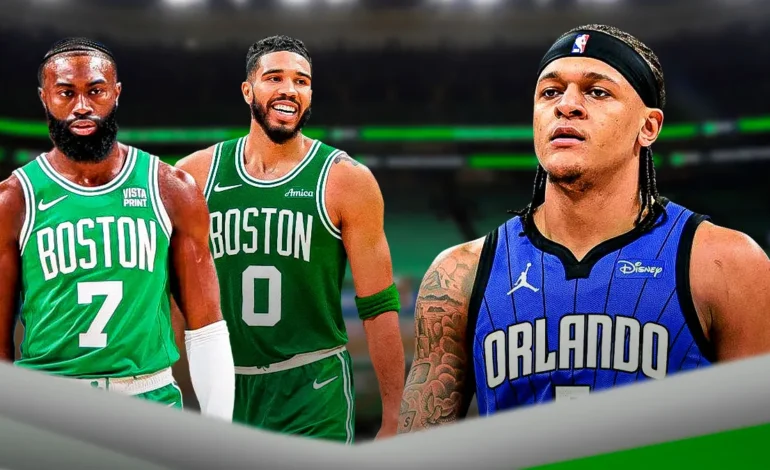
- Emergence of Jayson Tatum
- Growth of Jaylen Brown
- Strong team structure and playoff appearances
Orlando:
- Made occasional playoff appearances
- Lacked consistency and depth
Boston dominated most matchups during these years, re-establishing control in the rivalry.
2021–2023: Orlando’s Rebuild Gains Momentum
The Orlando Magic began developing a promising young core.
Key players:
- Paolo Banchero
- Franz Wagner
- Jalen Suggs
Team improvements included:
- Enhanced defensive systems
- Faster offensive pace
- Increased scoring efficiency
As a result, matchups became more competitive, and Orlando began closing the gap.
2025 NBA Playoffs: Rivalry Renewed
The Celtics and Magic met again in the 2025 NBA Playoffs (First Round).
Series overview:
- Boston dominated the early games
- Orlando secured a competitive win mid-series
- Boston closed the series decisively
Final result:
Boston Celtics won the series 4–1
This series reaffirmed Boston’s strength while highlighting Orlando’s growth and potential.
Head-to-Head Record and Statistical Trends
Overall record:
- Boston Celtics lead the all-time series
- Win percentage favors Boston at approximately 60 percent
Key trends:
- Boston performs strongly at home
- Orlando has improved in recent seasons
- Scoring averages have increased in modern matchups
From an analytical perspective:
- Boston excels in defensive efficiency and structured offense
- Orlando is improving in pace, transition scoring, and offensive rating
2024–2026: Modern Rivalry Landscape
Recent seasons have shown a shift toward a more competitive dynamic.
Observations:
- Games are higher scoring
- Orlando wins more frequently, particularly at home
- Boston remains consistent and dominant overall
Playing styles:
- Boston focuses on balance, defense, and efficiency
- Orlando emphasizes speed, athleticism, and youth
The rivalry is now more competitive and unpredictable than in previous years.
Key Players in the Rivalry
Boston Celtics:
- Paul Pierce
- Kevin Garnett
- Jayson Tatum
- Jaylen Brown
Orlando Magic:
- Shaquille O’Neal
- Dwight Howard
- Paolo Banchero
- Franz Wagner
These players have defined different eras and contributed to the evolution of the rivalry.
Timeline Summary
- 1989–1995: Orlando joins NBA; Boston dominates early
- 1996–2003: Competitive balance begins
- 2004–2008: Rebuilding with future stars
- 2010: Celtics win Eastern Conference Finals
- 2011–2016: Both teams rebuild
- 2017–2020: Celtics resurgence
- 2021–2023: Magic develop young core
- 2025: Celtics win playoff series
- 2026: Rivalry becomes increasingly competitive
Final Analysis
The Boston Celtics vs Orlando Magic timeline reflects a rivalry that has developed gradually over time.
Boston remains the historically dominant team, but Orlando’s steady improvement has significantly narrowed the gap. With a strong young core and evolving gameplay, the Magic are positioned to challenge Boston more consistently in the future.
If current trends continue, this matchup has the potential to become one of the most competitive rivalries in the Eastern Conference.