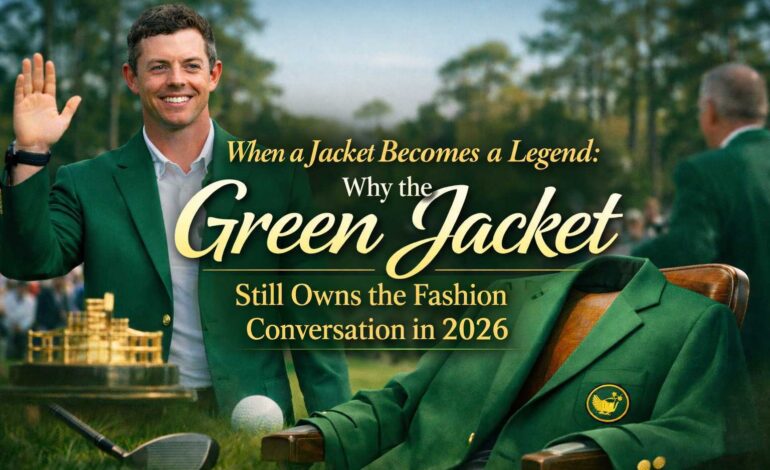
When a Jacket Becomes a Legend: Why the Green Jacket Still Owns the Fashion Conversation in 2026

Fashion does not always begin on a runway. Sometimes it begins in a sports moment that feels larger than the game itself. That is exactly why the Green Jacket Ceremony 2026 stood out. It was not only a trophy presentation. It was a lesson in image, tradition, color, tailoring, and memory.
This year, the ceremony carried even more weight because the Green Jacket Ceremony 2026 winner was Rory McIlroy, who defended his Masters title and joined Jack Nicklaus, Nick Faldo, and Tiger Woods as the only players to win back-to-back Masters titles. He finished at 12-under and beat Scottie Scheffler by one shot after a tense final round.
For fashion readers, that result matters because the green jacket is more than sportswear. It is one of the few garments in the world that instantly signals prestige, control, and history. It has its own color identity, its own ceremony, and its own visual language. That makes it one of the strongest style symbols in modern sport.
The 2026 Green Jacket Ceremony also reminded people that clothing can hold emotion. A jacket becomes powerful when it carries a story. In Augusta, the story is never only about who won. It is about how the winner enters a tradition that has been built over decades.
Why the Green Jacket Means More Than a Trophy
A sports prize turned into a fashion icon
The Masters green jacket has a long history. Augusta National members first wore the jacket in the 1930s so patrons could easily identify them. Then in 1949, Sam Snead became the first champion to be presented with it. That decision changed the meaning of the garment forever.
Since then, the jacket has become one of the most recognizable pieces in sports. Official Masters material describes it as “Masters Green,” made from tropical wool, with gold buttons, and built as a single-breasted jacket carrying the Augusta National logo. Those details matter because they give the piece a clear and lasting identity.
That is why the jacket works so well in fashion terms. It is not loud, but it is unforgettable. It is formal, yet not cold. It feels traditional, but it never looks old. Many fashion items chase status. This one already has it.
The ceremony gives the jacket its power
The jacket would not mean the same thing without the presentation. The Masters closes with a private Butler Cabin segment and then a second public presentation on the Terrace Putting Green. That staging turns a simple handoff into a full visual event.
This is important from a fashion point of view. Clothes gain value when people connect them with ritual. The green jacket is not sold like a normal item. It is awarded, photographed, remembered, and repeated year after year. The ceremony builds desire because it gives the garment a sense of arrival.
Why tradition keeps it fresh
Many old symbols lose their force because they stop evolving in the public eye. The green jacket is different. The Masters keeps returning to its visual importance, even producing official features on the jacket’s history and iconic looks. That keeps the piece alive for new audiences who may care as much about style as they do about golf.
Green Jacket Ceremony 2026 Winner and the Moment That Defined It
Rory McIlroy made the jacket feel bigger
The Green Jacket Ceremony 2026 winner was Rory McIlroy, and that gave the event extra force. He did not cruise to victory. He had to fight for it. Reuters reported that he let a record six-shot lead slide on Saturday, then recovered on Sunday to post a 71 and finish one shot ahead of Scheffler.
That kind of finish matters in fashion storytelling. A jacket looks different when it comes after pressure, recovery, and control. The same item can feel ceremonial in one year and legendary in another. In 2026, it felt legendary because the path to it was dramatic.
McIlroy’s win also placed him in rare company. AP and Reuters both noted that he joined Nicklaus, Faldo, and Woods as the only repeat Masters champions. That makes the jacket feel less like event clothing and more like membership in a very small club.
Green Jacket Ceremony 2026 highlights that people will remember
The main Green Jacket Ceremony 2026 highlights began before the jacket was even placed on McIlroy’s shoulders. There was the pressure of the final round, the swing in momentum, the birdie at the par-3 12th, the birdie at 13, and the wild tee shot on 18 that still ended with a winning bogey. Those moments gave the ceremony emotional heat.
Another key detail was timing. Official Masters coverage framed the 2026 event as the conclusion of the 90th Masters Tournament, which gave the ceremony an added sense of history. When a modern winner steps into a very old ritual, the contrast creates strong imagery.
The final image mattered too. The green jacket landed on a player who had already waited years for his first one and now had two in a row. That gave the ceremony a stronger emotional arc than a standard win would have had. Even for non-golf fans, that kind of image stays in the mind.
Why this year’s story felt so stylish
Style is not only about fabric. It is also about mood. The 2026 ending had all the things that fashion campaigns try to create: tension, reward, poise, family emotion, public attention, and one final visual symbol that ties it all together. In Augusta, that symbol was the jacket.
Why the 2026 Green Jacket Ceremony Worked So Well Visually
The color still does most of the work
Green is not a simple color in fashion. It can look rich or flat, formal or playful, depending on tone and fabric. The Masters jacket avoids that problem by staying very controlled. The official shade is “Masters Green,” identified by the club as Pantone 342. That clear visual identity is a big reason the piece remains so strong on camera.
The shade works because it feels deep without being dark. It stands out against white shirts, gold buttons, spring grass, TV lighting, and skin tones across different settings. It also looks equally strong in still photography and live broadcast. Few garments can do that so consistently.
Tailoring keeps the jacket timeless
The green jacket is not powerful because it is flashy. It is powerful because it is clean. The single-breasted shape, logo detail, and gold buttons keep it formal but readable. It looks sharp in motion, sharp in photos, and sharp in ceremony.
This is where fashion brands should pay attention. A garment does not need heavy design noise to be memorable. It needs shape, balance, and a reason to exist. The green jacket has all three. It respects tailoring, and that is why it survives trend cycles.
A lesson in controlled luxury
Luxury often works best when it feels calm. The green jacket is a great example. It does not beg for attention, but it never disappears. It communicates rank through finish, tradition, and restraint. That is a major lesson for modern menswear and sports-inspired fashion in 2026.
What Fashion Brands Can Learn From This Ceremony
The jacket proves that story sells style
Many brands focus too hard on product details and forget emotional context. The Masters does the opposite. It gives the garment meaning first. The cloth, buttons, and cut matter, but the story around them matters more. That is why the piece feels larger than a blazer.
For brands watching from the fashion side, the message is simple. Build products that carry memory. People remember clothing linked to moments, not just clothing linked to discounts. The 2026 Green Jacket Ceremony showed that once again.
Why America Jackets can study this moment
For a fashion-focused brand like America Jackets, this event offers a useful blueprint. It shows how one garment can sit between sport, celebrity, tradition, and visual culture all at once. That overlap is where modern fashion content performs best, because readers are not only buying a look. They are buying into a feeling and a scene.
This is especially true for event-driven fashion. When people search for ceremony looks, winner style, iconic sports fashion, or timeless green outerwear, they are often responding to the emotional charge around an image. The Masters has mastered that connection better than almost any other event in sports.
The bigger lesson for 2026 fashion
In 2026, audiences want clothes with identity. They want garments that look polished but still feel real. They respond to pieces that carry history, status, and a visible point of view. The green jacket keeps winning because it offers all of that without changing its core self.
The Green Jacket Beyond Golf
Why the look keeps crossing into fashion culture
The jacket belongs to golf, but its influence moves far beyond golf. It has shaped editorials, conversations about color, spring tailoring, club style, and ceremonial dressing. Official Masters coverage has even treated the jacket as a style object in its own right, which shows how deeply fashion is built into the event’s identity.
That is why the Green Jacket Ceremony 2026 highlights reached more than sports audiences. People who care about clothing noticed the polish of the moment, the fit of the jacket, and the way the whole ceremony turned one tailored piece into the center of the frame.
Style ideas readers can borrow
Most people will never wear the Masters jacket, and that is exactly why it has power. But they can borrow parts of the feeling. Deep green outerwear, clean brass-tone hardware, soft-structured tailoring, and strong spring layering all draw from the same visual family.
The point is not to copy the symbol. The point is to understand why it works. It works because it is clear, disciplined, and memorable. That is good fashion in any year.
What makes it timeless
Trends come and go because they rely on novelty. Timeless pieces survive because they rely on structure. The green jacket has structure in every sense: literal tailoring, visual identity, and ceremonial meaning. That is why it still feels important in 2026.
Conclusion
The Green Jacket Ceremony 2026 was important because it showed how one garment can carry sport, status, and style at the same time. Rory McIlroy’s win gave the moment drama. The Masters tradition gave it weight. The jacket itself gave it lasting visual power.
In the end, that is why people keep coming back to this image. The jacket is not only green. It is symbolic. It is earned. It is beautifully presented. And in a world full of fast fashion and short attention spans, that kind of meaning still matters.
FAQs
What was the biggest takeaway from the Green Jacket Ceremony 2026?
It showed that tradition and fashion still work together.
The ceremony proved that a well-known garment can still feel fresh when it is tied to emotion, history, and a powerful live moment. That balance made the event stand out in both sports and style coverage.
Who was the Green Jacket Ceremony 2026 winner?
Rory McIlroy won the 2026 Masters.
He finished at 12-under, shot a final-round 71, and beat Scottie Scheffler by one stroke to claim his second straight Masters title.
Why is the green jacket such a strong fashion symbol?
Because it combines color, tailoring, and history.
The jacket has an official green shade, tropical wool cloth, gold buttons, and a long tradition that dates back to members wearing it in the 1930s and champions receiving it from 1949 onward.
Why did the 2026 Green Jacket Ceremony feel bigger than normal?
Because the final round was full of pressure.
McIlroy had to recover from lost momentum and late stress before closing the win, which gave the ceremony more emotion and made the final jacket presentation feel more significant.
Can fashion brands learn anything from this event?
Yes, especially about storytelling.
The Masters shows that clothing becomes stronger when it is tied to ritual, memory, and identity. That is a smart lesson for brands creating meaningful fashion content in 2026.